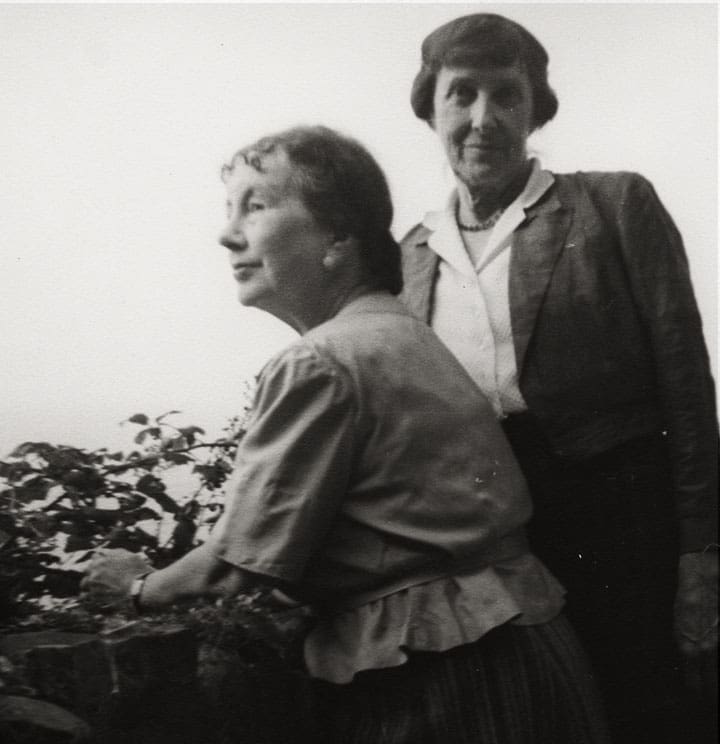
In the previous blogpost I mentioned that Mary Stella Edwards carried a copy of Edward Carpenter’s book Towards Democracy in her pocket for most of 1920. This is also the year that she wrote more published poems than in any other year of her life. “What a time you had in 1920!” wrote the classicist Gilbert Murray. “No other year competes with it.”
He wasn’t wrong. This was a momentous year for Mary Stella Edwards in so many ways. For example, she met Ted Earle at Regent Street Polytechnic in February. They became close friends and he introduced her to his lover, the socialist, environmentalist and gay rights activist, Edward Carpenter. Both the person and his writing – and to their wider circle of friends. She met the artist Edmond Kapp who became a life-long friend and champion of her poetry. She met Francis Henderson at his radical book shop at 66 Charing Cross Road (aka The Bomb Shop). He in turn introduced her to many artists and writers. And, of course, she met her great supporter Gilbert Murray in September – see previous blogpost – leading to a regular correspondence.
Significantly, Mary Stella’s half-sister Gladys got married, which although an uncomfortable occasion for Mary Stella (she and her sister did not get on for many reasons), meant that Gladys vacated their shared room. This now became Edwards’ sanctuary and studio, giving her much more privacy.
Meanwhile, Judith….
Meanwhile Judith Ackland had to spend more than half of 1920 back home in Bideford, Devon. She left London in March for the Easter holiday, fully expecting to return to Regent Street for the new term. However, after her lungs were ‘sounded’ and declared ‘not right’, she wrote to tell Mary Stella that she couldn’t return to London until the Autumn at the earliest. This was the start of their correspondence… and of Mary Stella Edwards’ lifelong low-level anxiety for Judith’s health. In April 1920, Judith’s younger sister Jean died of TB. By the time Judith made it back to London, Mary Stella had already left Regent Street and begun freelancing as an artist and illustrator.
Just as Mary Stella’s life was opening up, Judith’s world was closing down. It seems slightly odd that most of the important meetings and events of Mary Stella’s year occurred when Judith was away. That autumn, they were initially rather awkward with each other when they met up in person again. Judith was genuinely concerned about Mary Stella’s morals. It feels almost like a Sliding Doors moment. If Judith hadn’t returned that October, (albeit briefly) I think their lives could have turned out quite differently.
Low Tide
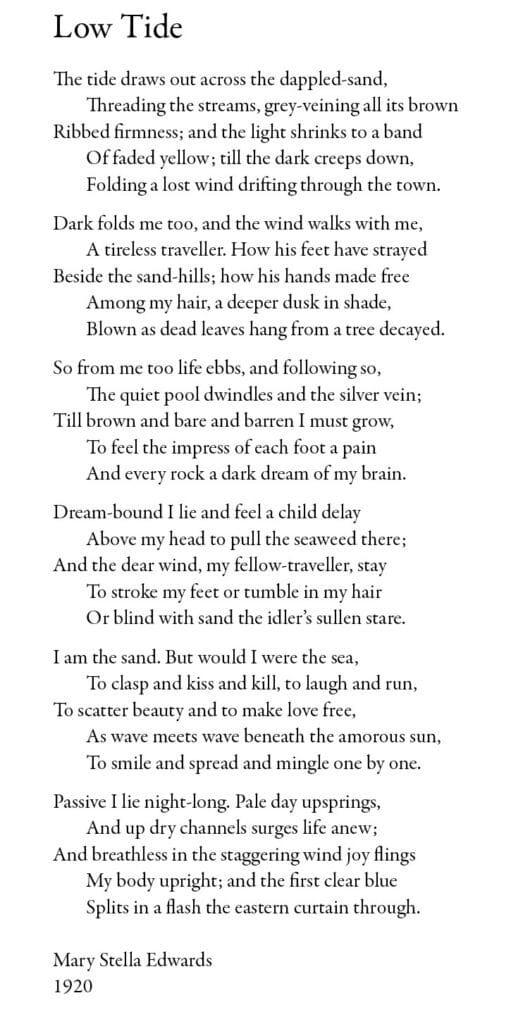
It might not be immediately obvious, but the above is a preamble to introduce Mary Stella Edwards’ poem ‘Low Tide’. It’s one of the many poems she wrote in 1920 and is my favourite from her first collection. It is such an odd poem, and I love the trick she plays on the reader.
At first glance it seems like any other traditional lyric poem. The first verse draws you in – setting the scene on a beach as the sun goes down and the tide goes out. A reader may feel lulled by the traditional English iambic pentameter (di-dum, di-dum, di-dum, di-dum, di-dum). The five-line stanza (or cinquain for the scrabble players) offering a gentle and predictable a-b-a-b-b rhyme. So far, so lovely.
The second stanza is a surprise… ‘Dark folds me too’…
Who’s ‘me’? There’s a momentary confusion as the reader realizes that the poem has gone from third-person description to first-person action. Perhaps the reader is now visualizing a lonely figure walking along the beach. But hang on, what’s this? ‘How his feet have strayed Beside the sand-hills; how his hands made free Among my hair’…. Er. What the actual heck?
By the third stanza it’s becoming clear that the sand on the beach is the poem’s narrator. However Edwards doesn’t make it explicit until the fifth stanza. Meanwhile she has plenty of fun with the words ‘barren’ and ‘tumble’ and ‘clasp and kiss and kill’ and ‘make love free … beneath the amorous sun’. If that wasn’t already shocking enough – it turns out that our narrator is sick of being passive (however friendly the wind) and is envious of the sea’s freedom.
To all the early twentieth century male critics who complacently claimed that women poets were inferior and lacking in humour – I’m throwing this poem at you, and I’m going to kick sand in your face. Oh, wait… I don’t need to do that, because Mary Stella Edwards is already on the case. The wind will ‘blind with sand the idler’s sullen stare’. Boom!
Penmaenmawr
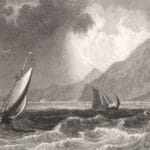
You might assume, as I did, that background information about the process of writing such an amazing poem would be written up in Mary Stella’s journal. If so, you’d be very wrong. Disappointingly, Edwards rarely mentions the poems she’s working on in her journals. (See Writing Poetry blogpost.) The first mention of ‘Low Tide’ I’ve found is for June 1920 when she reads the poem to Edmond Kapp in his studio. She then sends it with two others in a letter to Judith a couple of days later, with instructions to read the poems aloud. It’s most likely that Mary Stella wrote ‘Low Tide’ during or shortly after visiting north Wales in May/June with her family and a childhood friend ‘MPP’. This trip included a stay at Penmaenmawr and Llanfairfechan, and includes this wonderful diary entry for 3 June 1920:
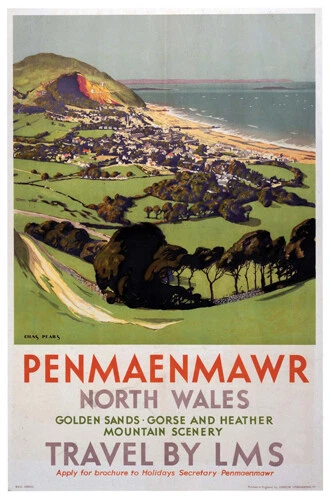
‘Penmaenmawr Mountains, and the Druid’s Circle. As MPP and I lay on the summit, looking out across the wet silver sands, with grey and silver clouds, and runnels of water curving to Anglesey, two women with sunshades, bounced breathlessly onto our precarious rock, delivering themselves of the usual laudatory remarks. It was hateful. “You came and quacked beside me in the wood.”’
– Mary Stella Edwards, June 1920
The quote at the end comes from the 1909 poem The Voice by Rupert Brooke, which finishes with the hilarious line: “By God! I wish –– I wish that you were dead!”
The Nation published ‘Low Tide’ in November 1920, to Mary Stella’s great delight. At the time it was a radical weekly newspaper, edited by Henry Massingham who she greatly admired.
Mary Stella Edwards also sent ‘Low Tide’ and ‘Noon Heat’ to Gilbert Murray after their first meeting in September. He wrote back immediately to say that both poems had ‘astonished as well as delighted’ him. He particularly admired ‘Low Tide’ writing:
‘I think Low Tide is a real beauty. The texture of it is lovely, and I like the way in which you become the sand two verses before you tell us so. It is an extraordinary feeling, that of losing yourself and melting into some bit of nature near you.’
– Gilbert Murray, October 1920
The influence of Towards Democracy
In the absence of any commentary from Mary Stella Edwards about the process behind this poem (and many others) I turn instead to her reading, which she does write about in her journals (see previous blogpost). Carrying a book in your pocket for nearly a year is significant because it means you can’t help but start to memorise lines. For Mary Stella it was Towards Democracy by Edward Carpenter. For me it was Ted Hughes’ book The Hawk in the Rain. Both are conveniently pocket-sized. Even now lines will come back to me from those poems, and they coloured my thinking for years. They still do. The poet Kathleen Raine1 wrote: ‘It is the words we have by heart that are ours, are part of us in a way that words we merely read, enjoy and forget, never can be.’
Towards Democracy is an epic but immensely baggy prose poem, which was never Edwards’ style. But she found the themes Carpenter explored and the way he expressed them immensely inspiring and often discussed the book with any new person she met. It starts with observations of the poverty Carpenter witnessed in the north of England and the lack of contact between the classes and, inspired by Walt Whitman, wills human conventions to crack and break. Sheila Rowbotham2 writes that Towards Democracy: ‘celebrates the real in the beauty of the natural world and exalts the body and human love …’ She continues: ‘The ‘democracy’ he sought was neither political or economic, but a new way of being human, a new manner of encountering others.’
Next blogpost: Pilgrimage