I began writing letters to Mary Stella Edwards two months into my research at the Ackland and Edwards archive. It felt awkward to be reading her letters and journals and I wanted to assure her that I respect her work and want to present it as she would wish. These letters are filled with questions that helped keep me on track in my archive research. Better than that though, weird things started happening after I wrote the very first letter…. Mary Stella Edwards actually replied! I’m laughing as I write that. Of course she didn’t. But strange coincidences really did begin to happen in the archive.
For example, my first two letters begin politely with ‘Dear Miss Edwards…’ But in the third letter, following “feedback” from the archive, I had to change tack. Instead, I wrote:
Dear Mary Stella Edwards,
In your letters to Michael Borrie at the British Museum you repeatedly asked him to write to you by name “without prefixes or suffixes” and “as a professional” so that’s what I’ll do too…
Names are important.
In later years Mary Stella Edwards frequently had to tell her correspondents to call her by her name. And she’s right. Being ‘Miss Edwards’ – or worse ‘Mrs Edwards’, which she found even more irritating – put her presumed marital status on display. It is also how people used to address amateur poets and artists – especially if there was an implied condescension. And, as she was at pains to point out, she was a professional poet.
From Mary to Stella
Mary Stella Edwards’ earliest poems were published under the name ‘Mary Edwards’, but by 1920 she was using her full name ‘Mary Stella Edwards’. Perhaps this made her name more distinctive? (It certainly makes it easier to search for her name online.) However, I think something else was going on.
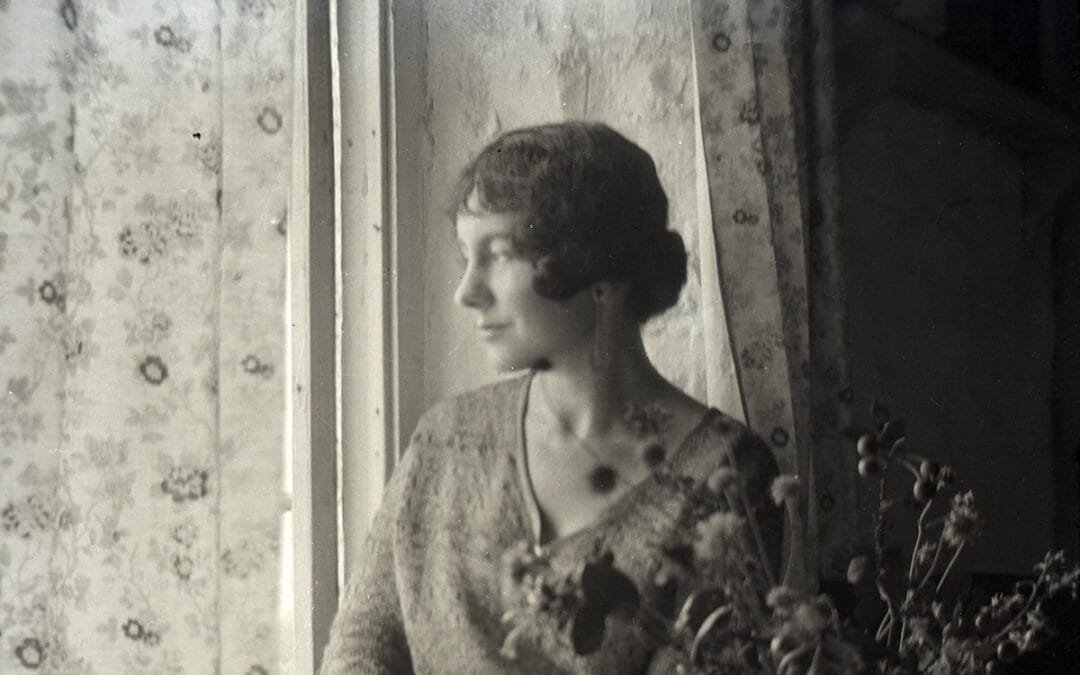
The year 1920 was a momentous one for Mary Stella (see previous post But would I were the sea). She was still at Regent Street Polytechnic at the beginning of the year and had a huge circle of friends. At some point while she was still at the Polytechnic her friends start calling her ‘Stella’. Not ‘Mary Stella’. Just ‘Stella’. Frustratingly I haven’t yet found a reference in her journals about why this started happening – but it does seem to coincide with her adoption of her full name when her poetry was published. Perhaps they were teasing her? But I don’t think so. The name ‘Stella’ seems to be her chosen name for anything relating to her work as an artist and a poet. By early 1921, months after she had left Regent Street and was freelancing for publishers, her friends were still calling her Stella.
For example, on 12 January 1921 she wrote:
Ted (Ted Earle) told me that a few nights ago, at Margaret Morris’s (modern dance pioneer), he, EC (Edward Carpenter) Constantine (Constantine Sarantchoff) and Herbert Furst were all sitting together. C introduced H to Ted, who said at once, “You know Stella Edwards, don’t you?” and they discussed me, H reiterating his conviction that I ought not to do both writing and drawing and when pressed further said, “Writing only.”
This excerpt is fascinating for all kinds of reasons – which I will discuss in the next blogpost on Mary Stella Edwards’ friendship with Ted Earle. This is a spoiler!
Fun in 1920s London as Stella
She also referred to herself as Stella when reporting conversations with friends in her journal. For example, (another spoiler!) on 19 March 1921, she wrote in her journal:
Ted (Earle) and I bade Connie (Constantine Sarantchoff) goodbye, and after calling to see Mrs Earl (Ted’s mother), set off for Sloane Square en route for Piccadilly. After losing each other by getting on separate buses, and only finding it out halfway along Piccadilly, we eventually reached Hamley’s in Regent St to buy a false nose, and other aids to fancy dress. Then bus all the way to Hampstead for lunch with Gilbert Beith1 at his flat in Willow Road. Ted put on the nose and was nearly thrown down the steps by the servant Arthur, as a tax collector. Then lunch, and lolling on sofas, and reading aloud stories from the Yellow Book, and a few minutes of mad football on the Heath. On the way to the station we passed Perrins Court.
“My birthplace!” I said,
GB: Are we to burn incense before it.
Ted: Well, I was born in Peckham, but I didn’t think you were born in a court!
Stella: (Robert) Browning was born in Camberwell…Tube to Leicester Square, and flying visit to the Royal Institute of Painters in Water-colours, Piccadilly (Private view day; and I met Edgar Bundy’s daughter, and utterly failed to remember her name when she was speaking to me) and the Royal Society of Painters in Water-colours, Pall Mall. Then plans and farewells…
After re-reading this diary entry I’m wondering whether ‘Stella’ was her Bohemian ‘Bright Young Things’ persona? They had so much fun in 1920s London!
Stella Mary
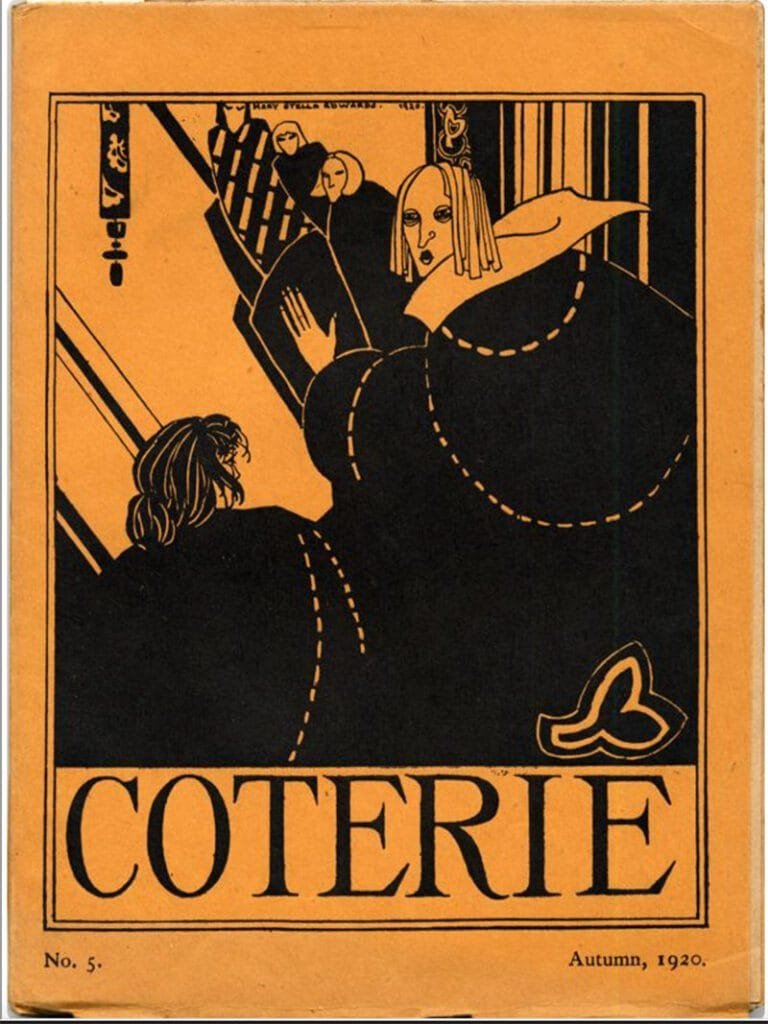
Mary Stella Edwards included her full name at the top
The name Stella stuck. In June 1921, after one of their in-person meetings, Gilbert Murray opened his letter with ‘Dear Stella’ for the first time, adding ‘is that the right name to call you?’ in brackets. He had previously addressed her as ‘Miss Edwards’ but called her ‘Stella’ from then on… though playfully this sometimes became ‘Dear Stella Mary’. Another friend from these early years, the artist Edmond Kapp, sometimes also addressed her as ‘Stellamary’.
Mary
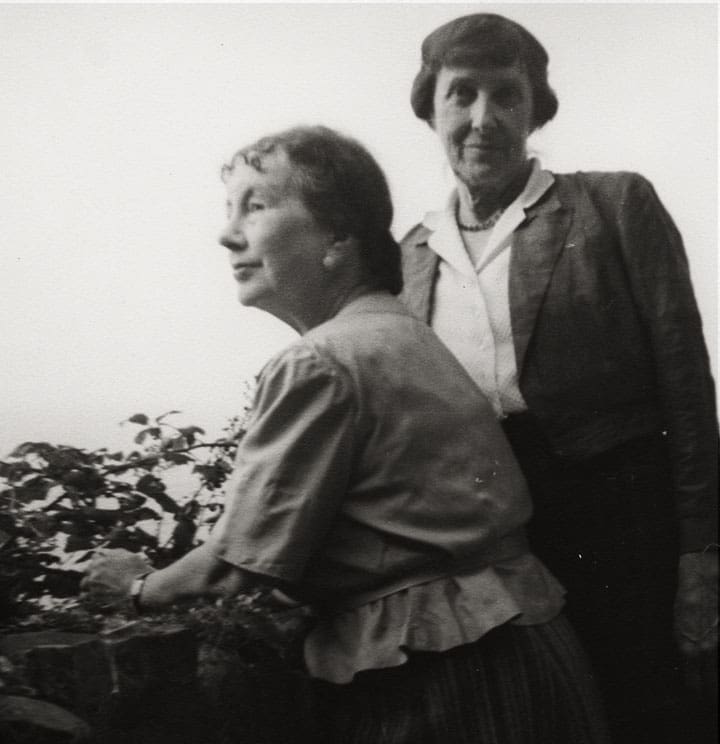
To Judith, however, she was ‘Mary’ (or more usually ‘dear’, ‘dearest’, or ‘darling’). I presume she was always Mary to her family, and her friends from childhood. A letter from an outraged relative seems to confirm this. On 20 December 1921, Mary Stella Edwards wrote in her journal:
In a letter, R Clarke Edwards says, “I am sorry to see that Mary is coming to public notice in such vile papers as the Daily herald (a misunderstanding) and the Nation. The less she has to do with them the better. Perhaps she is developing Bolshevistic tendencies, a circumstance which I, and no doubt you, would much deplore.”
Poor deluded old man!
R Clarke Edwards (her great uncle?) appears to have discovered that some of Mary Stella Edwards poems had been published in The Nation (which was considered progressive and left wing). The mention of the Daily Herald – a Labour Party supporting paper – maybe something to do with her September 1920 cover for Coterie. She hinted in earlier journal entries that it had caused a small outrage – though whether for its allusions to The Yellow Book, or if the more contemporary contributors objected, she doesn’t say. However, as she describes this as a ‘misunderstanding’ – perhaps Coterie had merely been mentioned in the newspaper and that was enough to annoy her elderly relation. Just as well he never read her journal…!
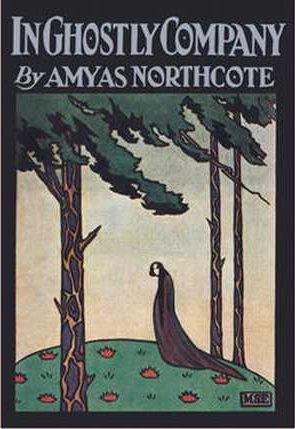
MSE
You can see that Mary Stella Edwards put her full name on the Coterie cover. It was an unpaid job, but she was hopeful it might lead to other paid commissions in the future. (Some things never change.) Shortly after this she developed the MSE mark, which she could insert less obtrusively into all her illustrative commissioned work. This acts rather like a maker’s mark – though now we might call it a logo. It was very effective, because a hundred years later it’s still possible to find her work. Other illustrators’ attributions from the time have disappeared.
In these blogposts I usually try to call Mary Stella Edwards by her full name. But it can feel repetitive to keep writing it, so at times I have called her ‘Mary Stella’ (which feels presumptive) or ‘Edwards’ (which feels rude). When I’m emailing Burton staff or my PhD supervisor, we all call her ‘MSE’. I’ve even started calling her MSE in my thesis. Passing the Cabin in Bucks Mills on my way back up from the beach a few days ago, I thought it didn’t feel like a bad option. Mary Stella Edwards. Mary Edwards. Stella Edwards. MSE. We all contain multitudes. We are never one person.
- Gilbert Beith was an important member of Edward Carpenter’s circle of friends ↩︎